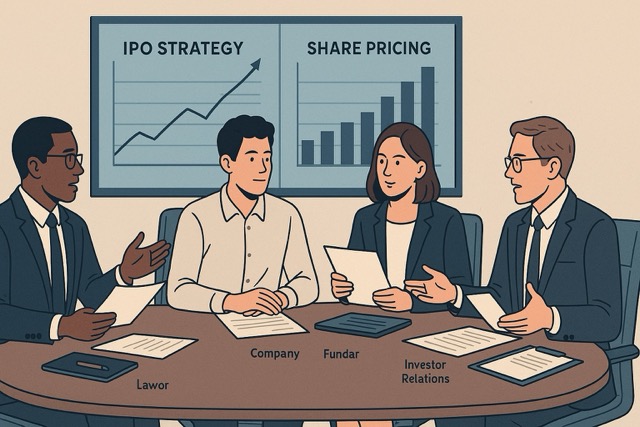
Going public isn’t just about ringing a bell or making headlines. It’s about shifting how you operate, report, and grow. As a founder, the decision to take your company public brings with it serious responsibilities, both legal and strategic. This isn’t something you do casually or quickly. You need to be operationally mature, financially transparent, and structurally sound. This article outlines the full IPO process—what to expect, what to prepare, and how to avoid the traps that can cost you time, money, and credibility.
Evaluate Whether You’re Truly Ready
Before anything gets filed or shared, you need to be brutally honest about where your company stands. Going public isn’t just a funding strategy—it’s a business transformation. You’ll need solid revenue, a repeatable growth model, and internal systems that support detailed financial reporting. If you’re still sorting out your books or depending on one or two clients for revenue, you’re not ready.
You also need to have leadership in place that can handle life in the spotlight. Public investors expect consistent performance, mature governance, and clear communication. If your board is nonexistent or mostly made up of close friends, start building one with experience. If your financial controls are loose, hire professionals to clean things up now. The public market doesn’t give second chances for weak structure.
Assemble the Right Advisors
Going public is a team sport, and you need the best players you can get. Your lead underwriter—usually an investment bank—will manage the offering process and help you set pricing. But that’s just one part of the equation. You’ll also need securities attorneys, auditors, financial advisors, and probably a dedicated investor relations consultant.
Each of these professionals has a critical job. Your legal team ensures all your disclosures are accurate and thorough. Auditors prepare and certify your financials. Communications experts help shape how you present your company to investors. Don’t treat these as interchangeable hires. Choose firms and individuals with IPO experience, especially in your sector. The wrong advice at the wrong time can delay or even derail your offering.
Organize Your Financials and Corporate Governance
Once your team is in place, it’s time to get your house in order. Public companies must provide multiple years of audited financial statements. If you’ve never undergone a full audit, expect surprises. Many founders discover issues with revenue recognition, expense classification, or capitalization tables during this stage. Fix them now—not under deadline.
You also need a board that meets public company standards. This includes having independent directors, audit and compensation committees, and documented governance procedures. Formalize your company policies—everything from whistleblower procedures to conflict-of-interest disclosures. If your business has legal exposure or loose documentation, now is the time to clean it up. A well-organized structure gives public investors confidence and prevents costly delays.
Draft the Prospectus and Required Filings
Once you’re financially sound and structurally organized, it’s time to document everything. You’ll work with your legal and accounting teams to draft the prospectus—a detailed document that describes your company’s operations, financial condition, risks, and market opportunity. This isn’t a pitch deck. It must be grounded, defensible, and complete.
This phase is tedious but essential. Every figure must match your audits. Every claim must be supported. You’ll need to disclose potential risks to your business, from customer concentration to competitive threats. Founders sometimes push back on this level of transparency, but that’s a mistake. Full disclosure now means fewer headaches later, especially when analysts and investors dig in.
Plan and Execute the Investor Roadshow
Once your documentation is filed and reviewed, you’ll start preparing for your investor roadshow. This is where you and your leadership team present your business to large institutional investors. You’ll travel—virtually or physically—to meet dozens of investors in rapid succession, giving the same presentation again and again, followed by detailed Q&A.
It’s exhausting and high-stakes, but it’s also your chance to sell the vision. Investors want to know not just what you’ve done, but what you’re about to do—and how you’ll execute reliably. You need to be confident, direct, and honest. Practice until your team is aligned and sharp. A successful roadshow builds demand and gives your bankers leverage in pricing the deal.
Price and Allocate Shares
After the roadshow, your underwriters will gather feedback and help you determine the right share price. This decision balances investor demand with your desire to raise capital. Price too high, and you risk a weak debut. Price too low, and you leave money on the table. It’s not just a math exercise—it’s a market decision.
Once pricing is set, shares are allocated to institutional investors. The night before the IPO, final terms are agreed upon. You’ll wake up the next day as the founder of a publicly traded company. But don’t get too caught up in the ceremony. Your responsibilities are about to increase, not decrease.
Adapt to Life After the IPO
Now that your stock is trading, everything changes. You’ll report earnings quarterly, manage investor expectations, and respond to market analysts. Your team needs to be organized and responsive. You’ll get questions you’ve never been asked before—about margins, seasonality, churn, and growth rates. Have your data ready and your messaging consistent.
You’ll also find yourself balancing short-term performance with long-term strategy. Public shareholders may have different time horizons than your original investors. Your job is to steer the company with discipline and vision. The IPO may be over, but now comes the real test: sustaining growth under public scrutiny.
How to Take a Company Public
- Get your company IPO-ready
- Hire underwriters and legal/audit experts
- Audit financials and build governance
- Draft filings and prospectus
- Conduct investor roadshow
- Price shares and go public
- Maintain reporting and market relations
In Conclusion
Taking your company public is about more than accessing capital. It’s about proving you’re ready to operate with accountability, transparency, and consistency. By preparing early, hiring the right team, and executing each step with precision, you set yourself up for a strong debut and a future of sustainable growth in the public market.
Follow Glen Leibowitz on Instagram: Get a behind-the-scenes look at entrepreneurial insights and more.

Glen Leibowitz is a CFO and financial executive with 20+ years in capital markets and fintech. Currently CFO at Bitcoin Depot, he previously held roles at PwC and Apollo Global Management and served as CFO of Acreage Holdings. He specializes in IPO readiness, SOX compliance, and finance transformations. A CPA, he holds a B.A. in Accounting from Queens College (NY).